Impact Scholars Program
Mentored. Empowered. Impactful.
Scholars receive dedicated mentorship and professional development while contributing to Neuromatch Academy and partner research projects. They produce citable micropublications, present their work in seminars, and translate their findings for the broader community.

Research that continues. Impact that endures.
Scholars either continue a research project initiated during Neuromatch or Climatematch Academy, or join a project proposed by one of our partner organizations. Working in small research teams with dedicated supervisors, scholars gain hands-on experience developing research questions, working with real-world datasets, and producing well-documented, citable research outputs that support the transition from coursework to independent research practice.
Eligibility
Completion of the Most Recent Academy Course
- Applicants must have successfully completed the most recent Academy course in their chosen domain as a student or a Teaching Assistant.
- Course completion is validated by certification confirming successful completion of both tutorials and projects.
- Teaching Assistants are eligible to participate as equal collaborators in project teams.
- Scholars may only participate in the ISP within the same domain as their Academy course. For example, if they completed the Academy in Computational Neuroscience, they can only apply to the ISP in Computational Neuroscience.
Program Components
-
Mentored research projects
Scholars work in small groups on a defined research project, supported by an expert supervisor.
-
Research outputs
Scholars produce well-documented, citable research outputs (e.g. micropublications, reports, or code).
-
Professional development
Scholars build core research skills, from project planning to communicating results.
Time Commitment
- Scholar teams must commit a minimum of 5 hours per week for a six-month period.
- All team members should ensure they can consistently meet this time requirement alongside their other responsibilities.
Published and open sourced
All Impact Scholar research projects culminate in summaries for the general public, a seminar presentation, and micropublications.

Past Climatematch Projects
Explore past projects that include climate indicators, earth science, sustainable development and more.
Past Neuromatch Projects
Browse past projects that investigated logistic regression, neural dynamics, activity flow mapping, and more.
Impact, Reach, and Scale
Since the program launched in 2023:
Scholars
Micropublications
Excellent Rating
High-Quality Rating
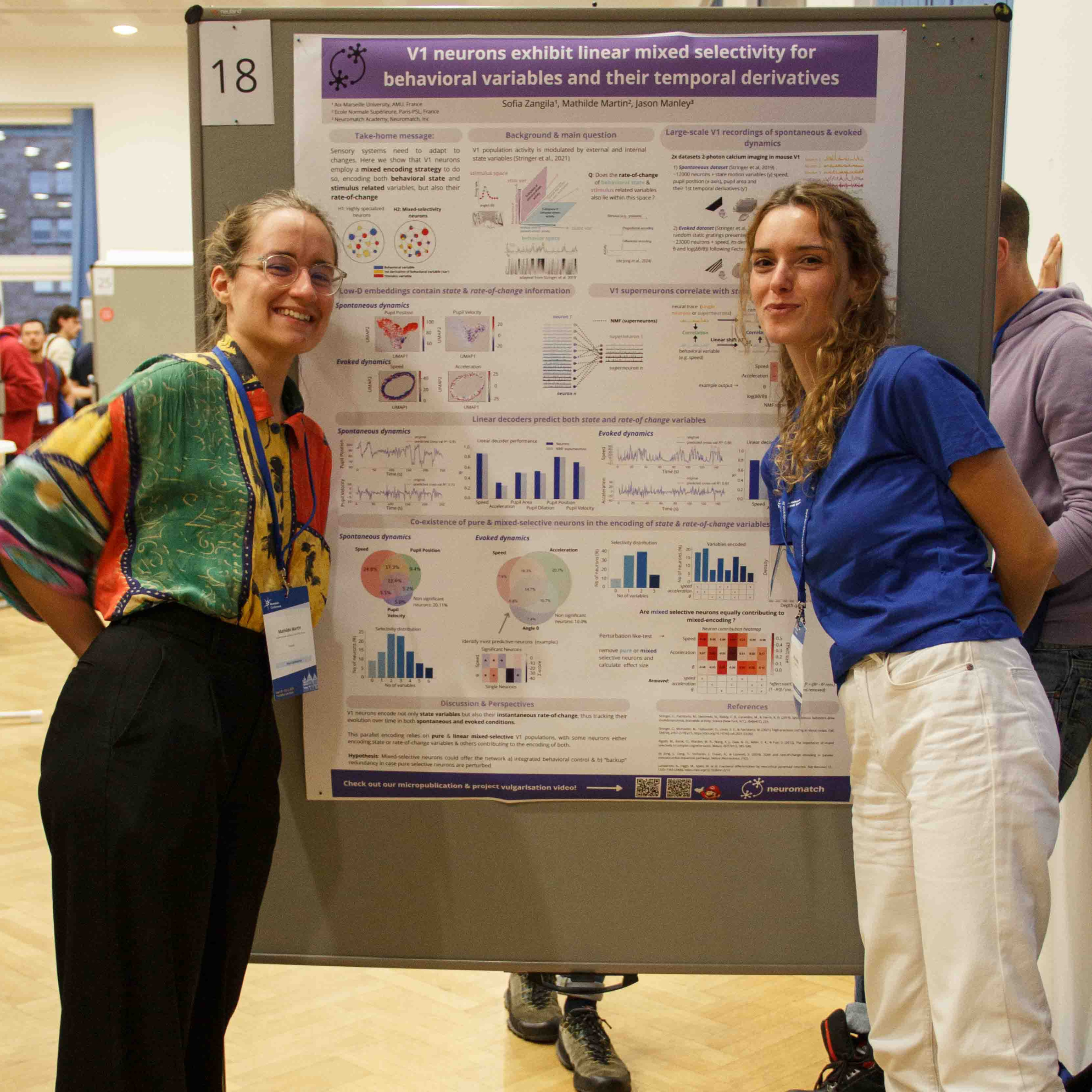
Presenting at the Bernstein Network Conference
Sofia Zangila and Mathilde Martin from France received a Bernstein Network Computational Neuroscience Travel Grant to present their Impact Scholars project at the conference.
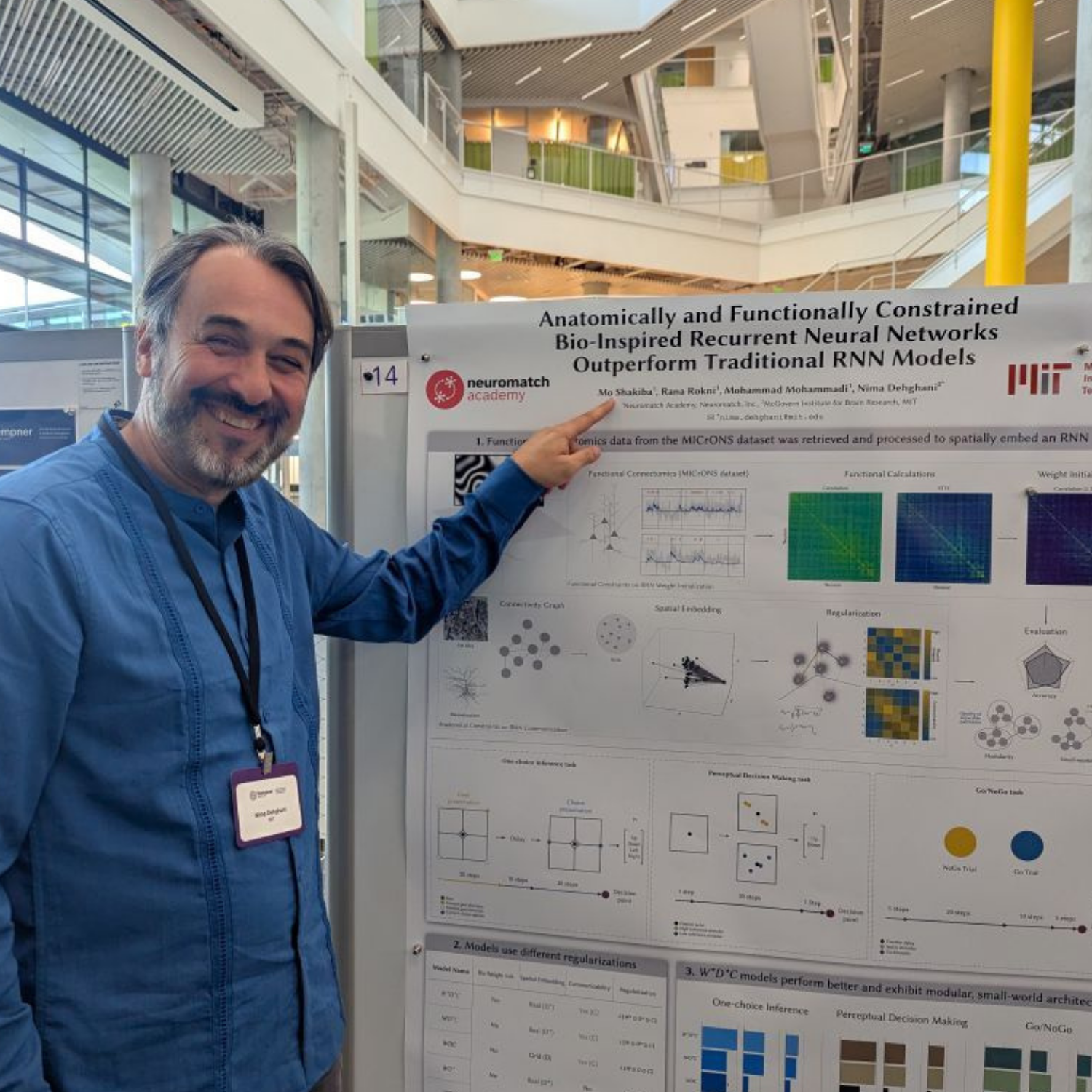
Presentations at CNS*2025 and the Kempner Institute Frontiers in NeuroAI
"Anatomically and functionally constrained bio-inspired recurrent neural networks outperform traditional rnn models"
This Impact team transformed their project into a micropublication, delivered two conference presentations, and are now preparing a journal publication!

Advance Your Work with Expert Guidance
Built on Mentorship, Driven by Impact
Impact Scholars are paired with dedicated mentors who provide individualized support on research, technical development, and project execution. Each mentor brings deep expertise and a commitment to helping scholars refine ideas, navigate challenges, and advance their work with clarity and confidence.
August - SeptemberPost-Academy Applications
Following the Academy, alumni and Teaching Assistants from that year may apply to the program as teams.NovemberProgram Kick-Off
Teams are welcomed into the program with virtual events and orientation, they are also added to a dedicated Discord server.November - DecemberImpact Scholar Workshops
Virtual workshops are held to strengthen research skills and provide professional development opportunities.November - MayTeam Projects
Scholars work with team members and a supervisor on a research project together, incorporating workshop learnings.May-JuneFinal Outputs
Teams share their work through public-facing summaries, seminar presentations, and citable micropublications.
What is involved?
Key Details at a Glance
We've highlighted the main questions. If you're interested, you can explore more detailed guidance.
Learning, growing, contributing.
Scholars share their journey and impact.
“The mentorship component stood out as the most valuable part for me; I finally received the guidance I had been seeking in this field.”
“The collaborative learning and guidance from mentors and TA has the potential to push you to fine-tune your skills.”

“This is an excellent opportunity to learn how to collaborate and communicate with large international teams and get in touch with countless experts across the world.”

“With Neuromatch’s support and mentorship, I feel confident in computational neuroscience. The Academy and our Impact Scholars publication showed me that I can grow, keep learning, and do even better with time.”
“The Impacts Scholars Program has taught me what it’s like to do a research project from the ground up and has made me a better researcher. You have transformed me!”

“Impact Scholars proved that Neuromatch won’t just teach you skills—it opens doors to real research and collaboration!”

“This was my first time leading a research-driven, machine learning–focused project from idea to implementation to publication. I turned a growing interest into a concrete, scholarly outcome in a short time!”