Courses
Global classroom, practical skills.
Each July, we offer immersive online courses that build core skills in computational neuroscience, climate science, and artificial intelligence and machine learning. Designed for a worldwide classroom, our programs run across multiple time zones with globally adjusted tuition to ensure accessibility for participants everywhere.
How Does It Work?
Our courses are inclusive, intensive two- or three-week synchronous virtual courses, where participants are matched into small learning pods of approximately 15 students, each supported by a dedicated Teaching Assistant.
Each day is structured around a balance of curriculum time and project time.
During curriculum sessions, participants are expected to be on Zoom and actively engage with their pod as they work through interactive course materials, supported by their assigned Teaching Assistant.
Following a midday break, participants focus on a collaborative group research project. During project time, support is provided by the pod’s Teaching Assistant, a project-specific Teaching Assistant with expertise in the relevant dataset, and a project mentor.
Our courses are intense and provide an introduction to many topics in the field with the opportunity to dive in deeper based on your interests.
Course Structure
Students work in small learning groups, or pods, made up of 10-15 students and a dedicated teaching assistant. These pods are formed on time slot, common research interests, and language preference using our custom matching algorithm.
Each day, students spend approximately 4.5 hours on curriculum and 3 hours on research projects.
Coursework
Composed of mini-modules, each with a short video introducing the concept, narrative explanation, and interactive coding tutorials in Python. All in an interactive Python notebook so that you can execute code in-line while you learn with your peers.
Your assigned teaching assistant is with your pod for all of curriculum time.
Research Projects
Apply the techniques you learn to real research projects aligned with your interests. Your pod is split into two project groups supported by your pod’s teaching assistant, a project teaching assistant, and a mentor. Together, you will develop research questions and explore open science datasets.
Participation in the project component is optional. Students who complete it are eligible to apply to the Impact Scholars Program, which enables teams to continue conducting academic research with the support of a mentor.
Timing
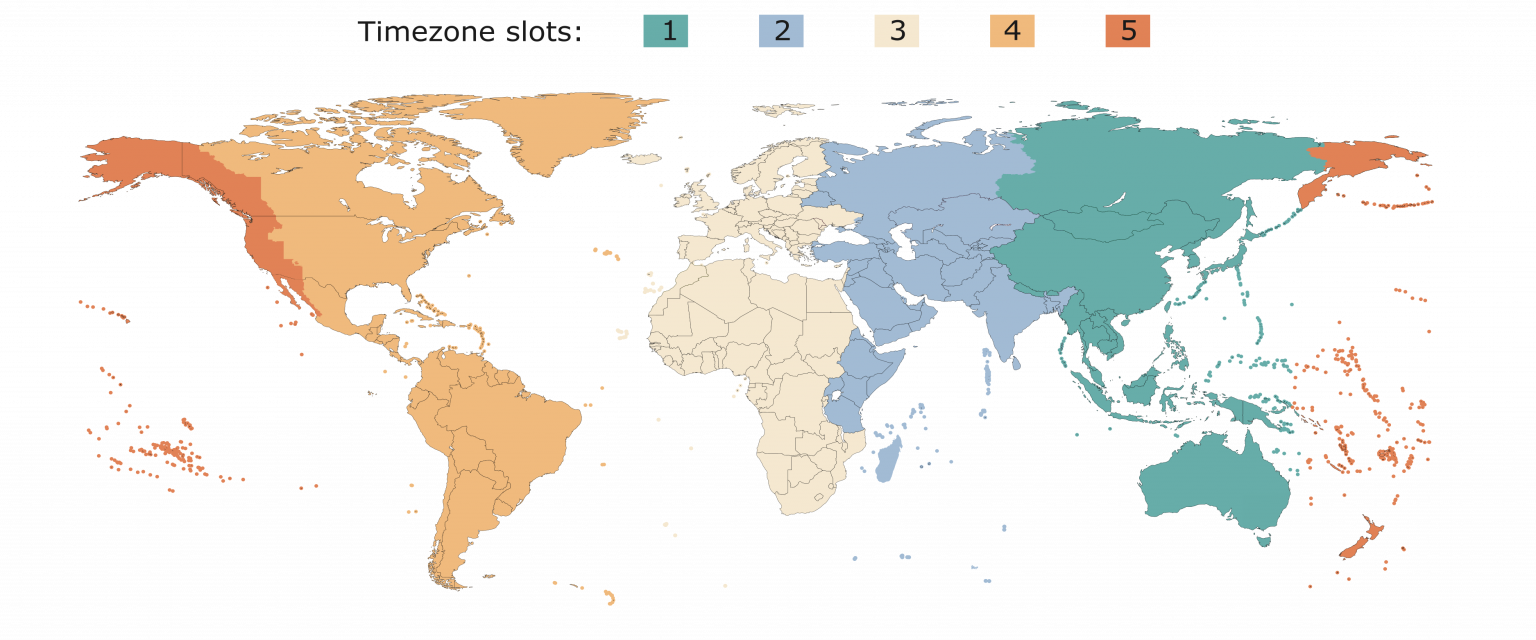
Our courses are delivered across five timeslots around the world to align with global time zones and held each July to align with major summer breaks across most educational systems.
Courses are full-time commitments lasting two or three weeks. Participants are required to attend live sessions during their selected daytime time slot and may not complete the course overnight. Applicants should therefore choose the time zone option that best fits their daytime availability when applying.
Our Course Topics
| Courses | Course link | Prerequisites | Next course dates | |
|---|---|---|---|---|
 |
Computational NeuroscienceThe curriculum integrates cutting-edge advances in machine learning and causality research with state-of-the-art modeling approaches in neuroscience. |
See course details | See prerequisites here | TBD July 2027 |
 |
Deep LearningOur Deep Learning (DL) course grew out of the realization that there is a real need for teaching an ethically responsible hands-on TA-guided code-first DL curriculum that emphasizes how DL can be used to advance science and achieve better scientific insights. |
See course details | See prerequisites here | TBD July 2027 |
|
NeuroAIWhat are common principles of natural and artificial intelligence? |
See course details | Must take CompNeuro and Deep Learning course or equivalent. See all prerequisites here | TBD July 2027 |
|
Computational Tools for Climate ScienceThrough this program, students will gain skills and knowledge in the areas of climate science and impact, computational methods, data access, and scientific practices. |
See course details | See prerequisites here | No live course dates are upcoming. |
Why Learn with Neuromatch?
Immersive Commitment
Full-time, focused learning.
Dedicate 8 hours per day, 5 days a week, and stay engaged with your pod to get the most from the course. No more than two absences to receive a certificate. See our Course Attendance Policy.
Collaborative Learning
Learn together, succeed together.
Work closely in small groups of ~15 students with teaching assistants, sharing ideas and contributing to team projects. Video cameras on and engage in classroom discussion!
Real Research
Hands-on projects with guidance.
Contribute to meaningful research under the support of teaching assistants and mentors, with a final presentation to showcase your work.
Recognized Achievement
Certificates and badges.
Receive a certificate for completing the course, and earn a special badge if you complete the collaborative project portion.
Applications for the July 2027 Academy will open in February 2027. Applicants will be required to create a profile in our portal and complete an online application through the platform once applications open.
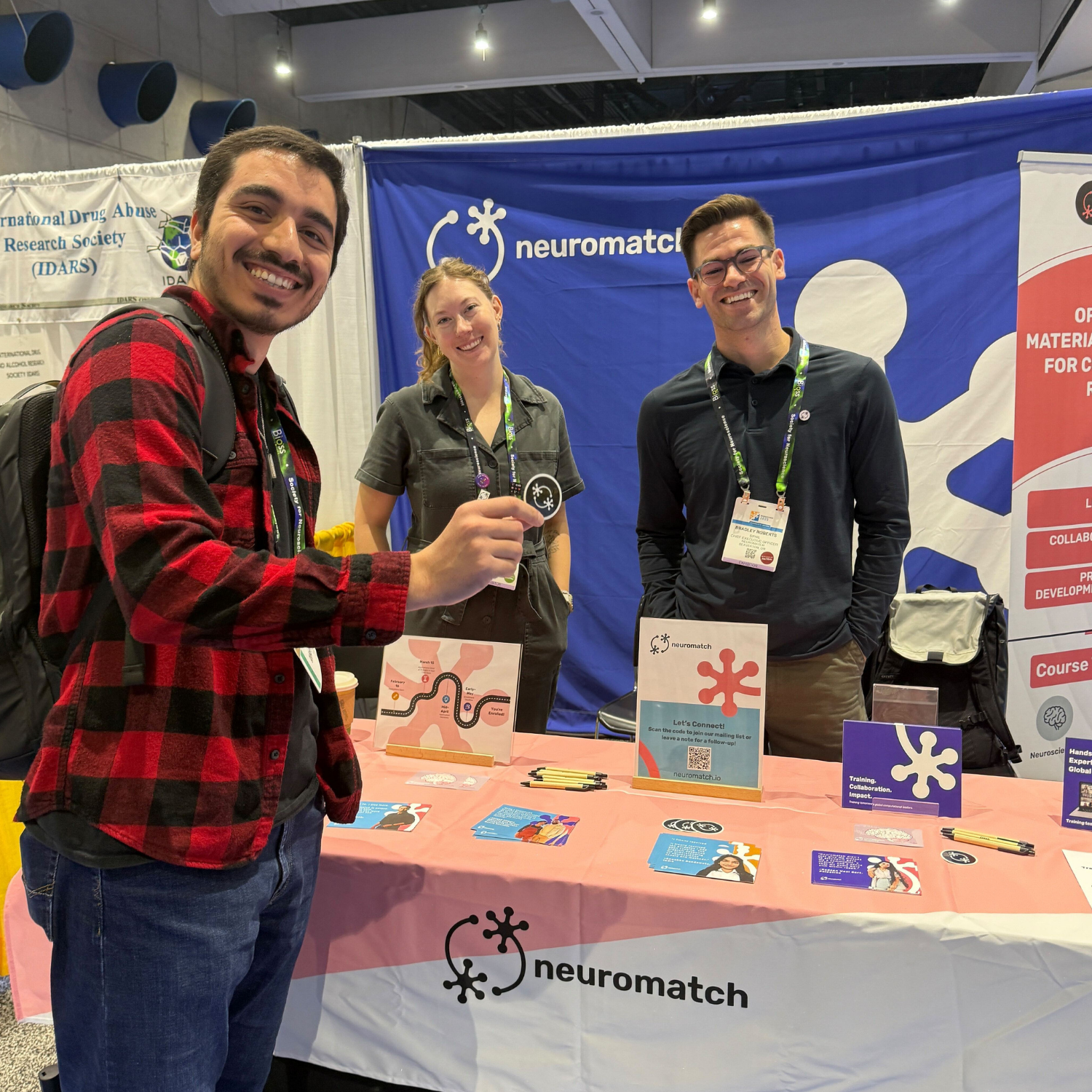
Affordable, accessible, equitable.
Our globally adjusted tuition ensures that learners everywhere can participate in high-quality computational science training, no matter where they are.
"Neuromatch’s mission is to make education and research in computational science accessible to everyone, everywhere. They adjust tuition fees based on where each student is located, so anyone with curiosity and motivation can take part"
- Sepehr Gourabi, Iran and US, Computational Neuroscience Alumni.
Tuition Fees
Making computational science accessible to everyone, everywhere.
We adjust our tuition fees based on the cost of living in the country where you are located while taking the course. We also offer tuition waivers for participants who need financial support, with waiver amounts varying by location.
Tuition fees directly support the payment of our Teaching Assistants and help sustain Neuromatch as a global, nonprofit organisation.
Application & Course Timeline
January 2027Information Webinars
Learn more about the courses, meet the community, and ask questions!February 2027Applications Open
March 2027Applications Close
Midnight in your local time zone.Mid-April 2027Application Decisions
Welcome to the Neuromatch community!Due early-May 2027Enrollment Deadline
Accept your offer and make your paymentEarly-June 2027Matching
You'll learn what timeslot you are are in and get information about your pod.TBD July 2027Orientation
Each course will have an orientation, this is required for all students.TBD July 2027CompNeuro and Deep Learning courses start!
TBD July 2027NeuroAI course starts!
July 2027Closing ceremonies
August 2027Certificates sent out
Frequently Asked Questions
Have more questions? Please email the Neuromatch Acadmey Support Team at nma@neuromatch.io
Join our mailing list
Be the first to hear when applications open for our 2027 courses.
Join a Information Session
Each January we host Information Sessions where you can ask your questions and learn exactly how to apply successfully.
Watch the January 2026 Session.
Ask an Ambassador
Our community of volunteer Neuromatch Ambassadors around the world can help answer your questions and share their experiences in multiple languages!
Learning, collaborating, achieving.
Students reflect on their journey through the Academy.
“It was an amazing experience to be part of such an accessible and inspiring platform alongside young PIs and postdocs from around the world.”
“We got mentorship from experts in the field. It was a unique experience and I enjoyed the course so much.”
“The collaborative learning and guidance from mentors and TA has the potential to push you to fine-tune your skills.”
“I saw what open, rigorous, and collaborative science could look like. I saw people I wanted to become, and a path I hadn’t known was there, and I kept coming back.”

“There is more than classes; there are opportunities to do research and connect with people from around the world. As a student, you can learn new concepts, investigate new ideas, meet amazing people, and feel part of a community of aspiring and established scientists.”
“The program gave me the chance to learn, get research experience, and collaborate with experts in the field. These programs can open doors, build confidence, and truly change your career path.”
“Neuromatch adjusts tuition fees based on where each student is located, so anyone with curiosity and motivation can take part. That openness creates opportunities for people who might not otherwise have access.”
“You’ll start to build an intuition for key concepts in the field and gain some hands-on experience. No one becomes an expert in just three weeks. But this is a great start to an exciting journey!”
“Neuromatch also inspired my love of open science, open learning and open source-tools.”