NeuroAI
A two-week, immersive course every July.
Neuroscience, cognitive science, and AI are all questing for principles that help generalization. Learn more through a live, synchronous program designed for focused, hands-on learning.
Get Ready to Launch into Your NeuroAI Journey
What are common principles of natural and artificial intelligence?
The core challenge of intelligence is generalization. Neuroscience, cognitive science, and AI are all questing for principles that help generalization. Major system features that affect generalization include: task structure (multitasking, multiple inputs with same output and vice versa), microcircuitry (nonlinearities, canonical motifs and their operations, sparsity), macrocircuitry or architecture (e.g. modules for memory, information segregation, weight sharing by input symmetry or common development), learning rules (synaptic plasticity, modulation), and data stream (e.g. curriculum).
We aim to present current understanding of how these issues arise in both natural and artificial intelligence, comparing how these system features affect representations, computations, and learning. We provide case studies and coding exercises that illustrate these issues in neuroscience, cognitive science and AI.
- Synchronous, virtual course runs every July
- Full-time effort of 8 hours per day, 5 days per week
- Code taught through Google Colab or Kaggle using Python
- Work in a pod of ~15 students and a dedicated Teaching Assistant
- Complete a collaborative research project with the support of a Project Teaching Assistant
- See more about our unique course format, timing, and cost on our Courses page
What You'll Learn
- A common understanding and vocabulary to describe challenges faced by naturally intelligent systems
- Describe core shared concepts in neuroscience, cognitive science and machine learning and how they differ to each other
- Describe and implement different ways in which an ANN can be compared to a BNN
- Describe multiple scales of computation, and multiple scales of study
- Experience a multiplicity of approaches and interests at the intersection of neuro and AI; be able to describe some of these approaches and interests
- Machine learning module: fitting models to data, using generalized linear models, uncovering underlying lower dimensional structures, and building complex models using deep learning
- Dynamical system module: building biologically plausible models based on bottom-up knowledge of the system being modeled, covering topics like linear systems and dynamic networks
- Stochastic processes module: methods for getting better insight through measurement tools, hidden dynamics, optimal control, and reinforcement learning
- Causality module: understanding when something is causally related vs. just correlated
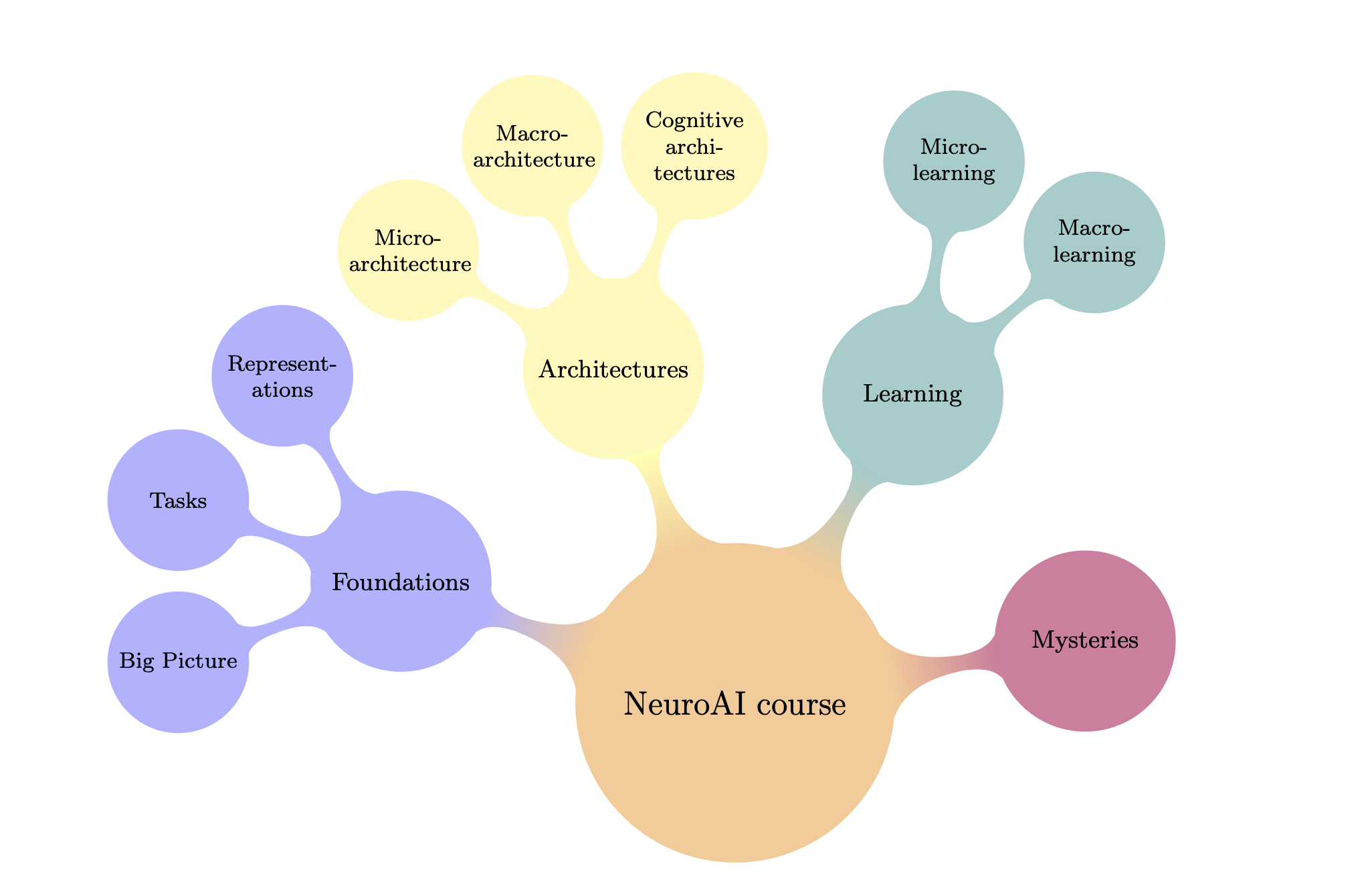
Created by Patrick Mineault
Join us as a Neuromatch student
Immersive Commitment
Full-time, focused learning.
Dedicate 8 hours per day, 5 days a week, and stay engaged with your pod to get the most from the course. No more than two absences to receive a certificate. See our Course Attendance Policy.
Collaborative Learning
Learn together, succeed together.
Work closely in small groups of ~15 students with teaching assistants, sharing ideas and contributing to team projects. Video cameras on and engage in classroom discussion!
Real Research
Hands-on projects with guidance.
Contribute to meaningful research under the support of teaching assistants and mentors, with a final presentation to showcase your work.
Recognized Achievement
Certificates and badges.
Receive a certificate for completing the course, and earn a special badge if you complete the collaborative project portion.
NeuroAI Alumni
Prerequisites
What you should know before you apply to the NeuroAI course. Find resources to upskill in any of this topics in the Course Book.
- This course is aimed at a more advanced audience than our other courses. Students should have already taken our Deep Learning and Computational Neuroscience courses, or equivalent courses.
- Python
- Students should have intermediate proficiency and be familiar with variables, lists, dicts, the numpy and scipy libraries as well as plotting in matplotlib. Especially for projects, you will benefit from knowing PyTorch.
- Math
- Students should know linear algebra, probability, basic statistics, and multivariable calculus.
- Deep Learning
- Students should be familiar with the core ideas of deep learning, including definitions of task goals, neural network architectures, and training and testing procedures.
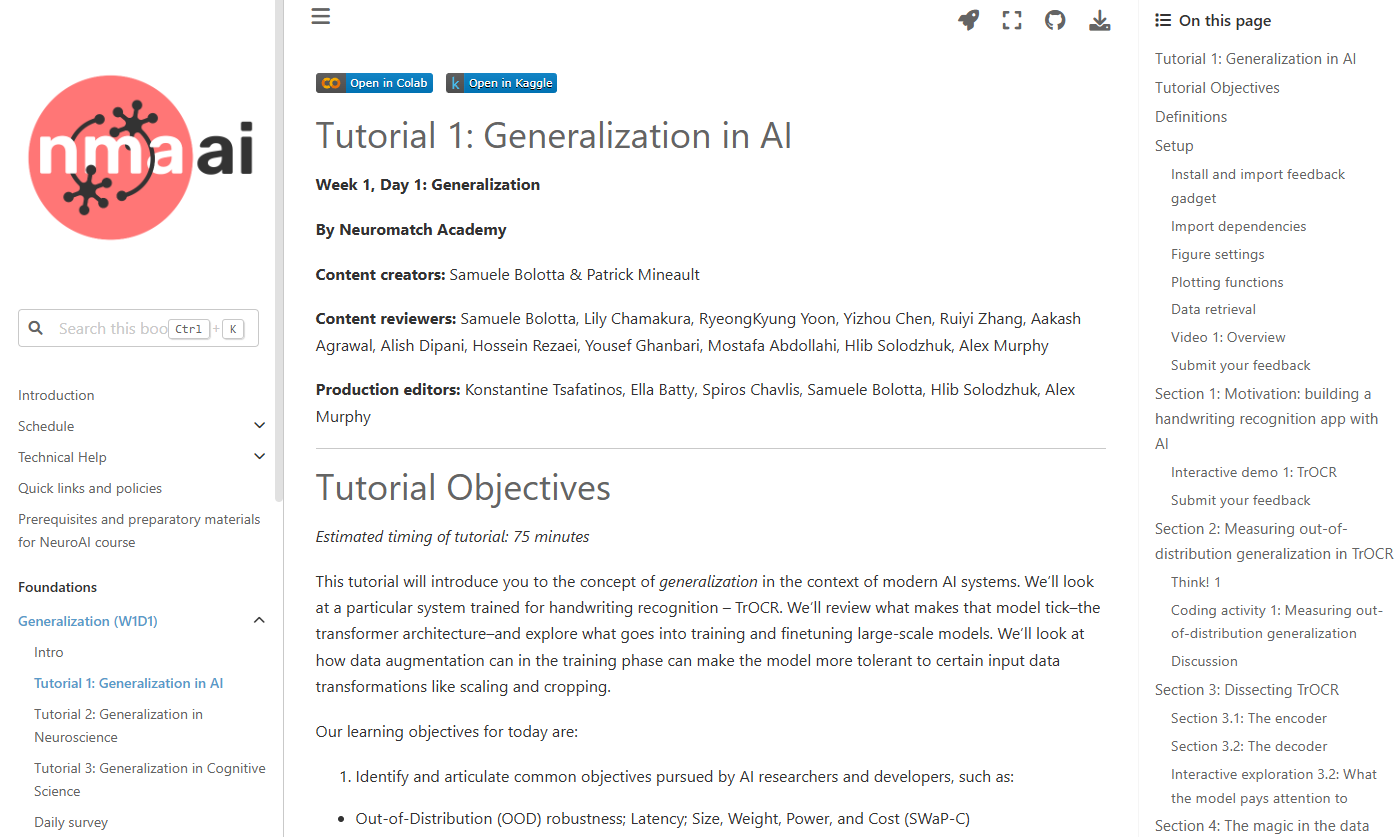
Hear from students about how the Academy can unlock your potential in machine learning.
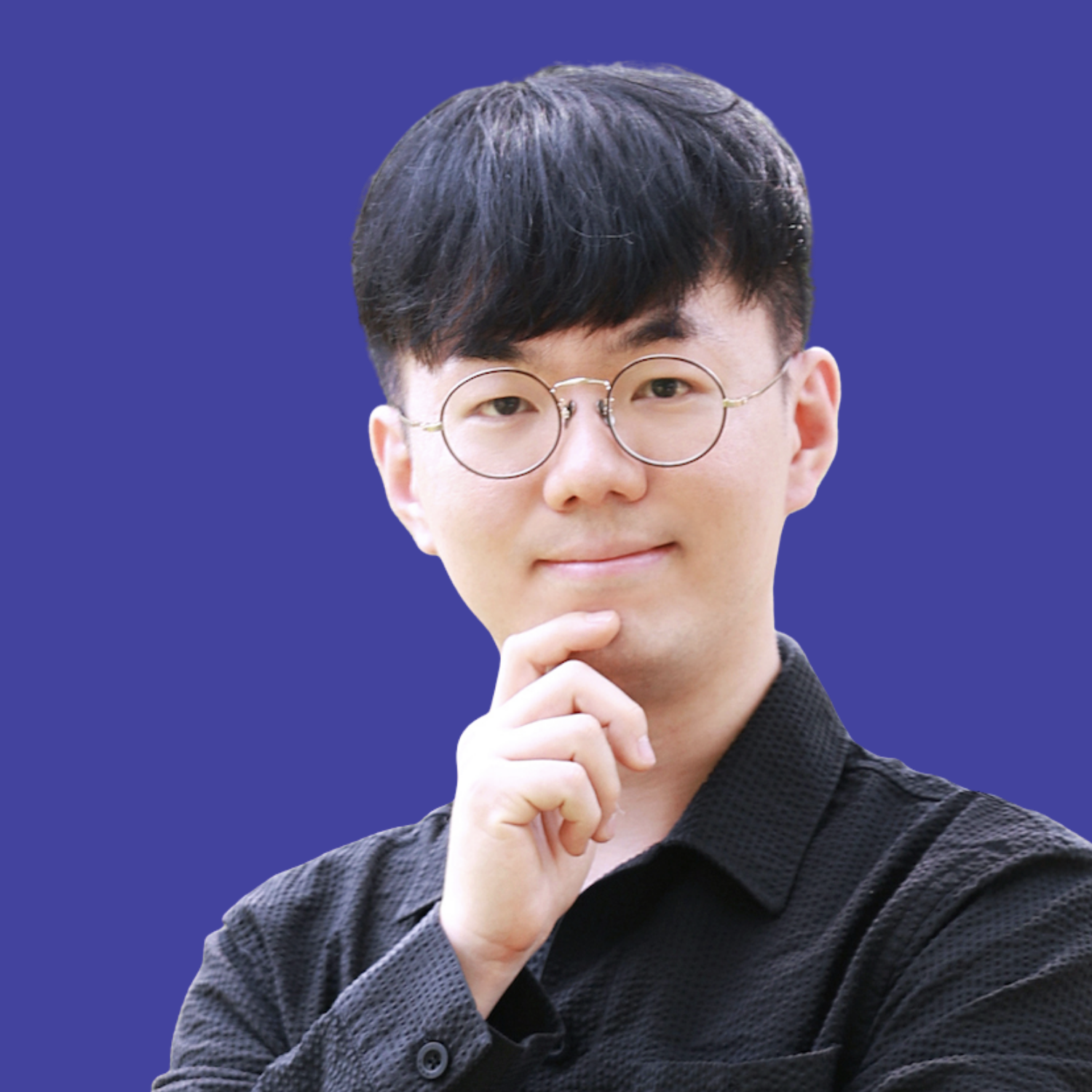
“Neuromatch also inspired my love of open science, open learning and open source-tools.”

“Impact Scholars proved that Neuromatch won’t just teach you skills—it opens doors to real research and collaboration!”

“This was my first time leading a research-driven, machine learning–focused project from idea to implementation to publication. I turned a growing interest into a concrete, scholarly outcome in a short time!”
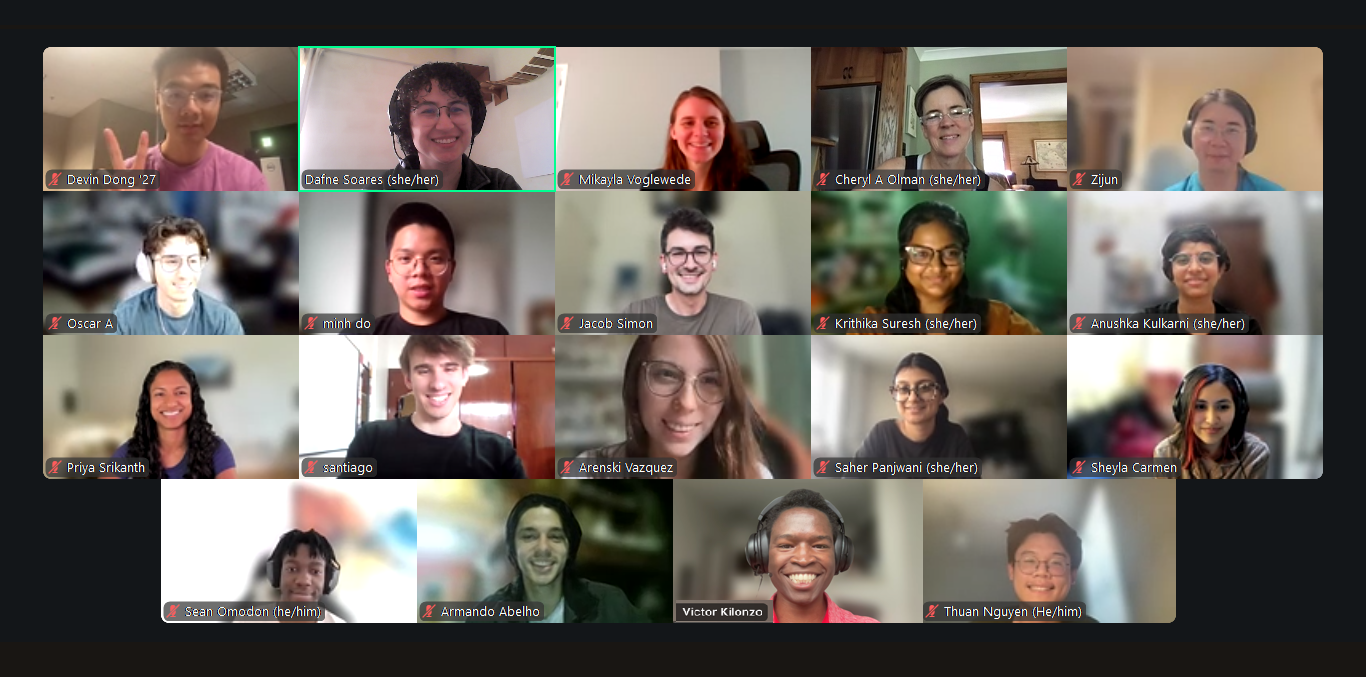
Learn Together, Achieve Together
Each pod brings a small group together with a dedicated Teaching Assistant.
Collaborate, code, and solve real research problems side by side—just like a mini research team.
Apply
Applications for our 2027 course open in February. Join our mailing list to be the first to hear details about our 2027 courses.
To check registration status and submit an application, visit our Portal, make a profile, and then apply for our course if it is available.
Join our mailing list
Be the first to hear when applications open for our 2027 courses.
Join a Information Session
Each January we host Information Sessions where you can ask your questions and learn exactly how to apply successfully.
Watch the January 2026 Session.
Ask an Ambassador
Our community of volunteer Neuromatch Ambassadors around the world can help answer your questions and share their experiences in multiple languages!
Still have questions?
Please email us at nma@neuromatch.io